
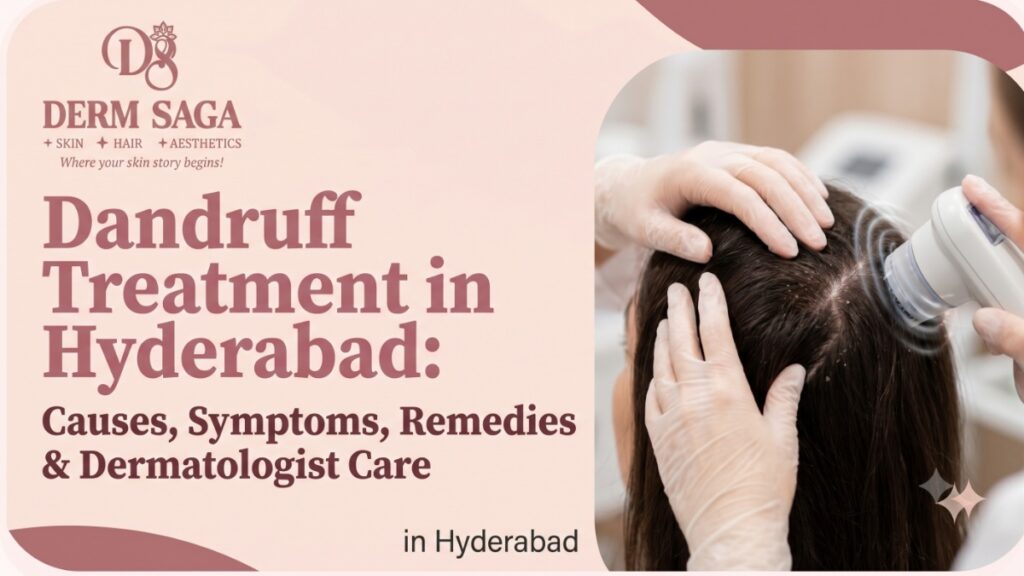
Dandruff Treatment in Hyderabad: Causes, Symptoms, Remedies & Dermatologist Care
Are you struggling with persistent dandruff, an itchy scalp, or white flakes on your shoulders despite washing your hair regularly? Dandruff is a common scalp condition, but when it keeps returning, it may need more than a change in shampoo.
If you are looking for dandruff treatment in Hyderabad, understanding the cause of your scalp problem is the first step towards choosing the right treatment.
At Derm Saga Skin & Hair Clinic, located in Kalyan Nagar near Moti Nagar, Hyderabad, Dr. Sravya Chandana provides dermatology care for various skin and hair concerns. A dermatologist can examine your scalp, identify the likely cause of dandruff, and recommend a suitable treatment plan based on your symptoms.
What Is Dandruff?
Dandruff is a common scalp condition that causes visible flakes of skin, sometimes accompanied by itching and irritation. It can occur due to several factors, including scalp inflammation, excess oil, and sensitivity to naturally occurring yeast on the skin.
Dandruff is not necessarily a sign of poor hygiene. Washing your hair regularly may help manage flakes, but the right treatment depends on what is causing them.
In some cases, symptoms that appear to be dandruff may actually be caused by seborrheic dermatitis, scalp psoriasis, eczema, or contact dermatitis.
What Causes Dandruff?
Understanding the possible causes of dandruff helps determine the appropriate treatment.
1. Excess Oil on the Scalp
An oily scalp can contribute to greasy flakes and irritation. Dandruff is often associated with seborrheic dermatitis, an inflammatory condition that commonly affects oil-producing areas of the skin.
2. Malassezia Yeast
Malassezia is a yeast that naturally lives on the skin. In some people, it is associated with scalp inflammation and flaking.
3. Dry or Irritated Scalp
A dry scalp may produce small flakes and feel tight or itchy. However, dryness and dandruff are not always the same condition, so the treatment may differ.
4. Hair Products and Scalp Sensitivity
Certain shampoos, conditioners, hair dyes, styling products, or fragrances can irritate the scalp or trigger allergic contact dermatitis.
5. Other Scalp Conditions
Persistent scaling, redness, thick patches, or severe itching may indicate a condition such as psoriasis, eczema, or seborrheic dermatitis that requires medical assessment.
Common Symptoms of Dandruff
You may have dandruff or another scalp condition if you experience:
- White or yellowish flakes on the scalp and hair
- Persistent itching
- Greasy or oily patches on the scalp
- Redness or irritation
- Flakes on your shoulders or clothing
- Recurrent scaling even after using anti-dandruff shampoo
If the symptoms are severe, keep returning, or occur with hair loss, pain, swelling, or thick crusts, consult a dermatologist instead of repeatedly trying different products.
What Is the Best Dandruff Treatment in Hyderabad?
There is no single dandruff treatment that works equally well for everyone. Treatment depends on whether the scalp is oily, dry, inflamed, sensitive, or affected by another dermatological condition.
1. Medicated Anti-Dandruff Shampoos
Depending on the diagnosis, a dermatologist may recommend shampoos containing ingredients such as:
- Ketoconazole: An antifungal ingredient used to manage dandruff associated with yeast.
- Selenium sulfide: Helps reduce flaking and scalp scaling.
- Zinc pyrithione: Used in some anti-dandruff formulations, depending on product availability and local regulations.
- Salicylic acid: Helps loosen and remove accumulated scalp scales.
Use the product according to its instructions or your dermatologist’s advice. Some medicated shampoos need to remain on the scalp for a specified period before rinsing.
Using more product or washing excessively will not necessarily improve results and may irritate the scalp.
2. Prescription Scalp Treatments
When dandruff is associated with significant inflammation, redness, or itching, a dermatologist may prescribe an appropriate scalp lotion, solution, or other medication.
The choice of treatment depends on the diagnosis and severity. Avoid using steroid-containing lotions or combination creams on your own, as inappropriate or prolonged use can cause side effects.
3. Treatment for Seborrheic Dermatitis
If your symptoms are caused by seborrheic dermatitis, your dermatologist may recommend a combination of medicated shampoos and targeted treatments to control scaling and inflammation.
This condition can recur, so an appropriate maintenance routine may be needed even after symptoms improve.
4. Identifying and Avoiding Irritants
If your scalp irritation is related to a hair-care product, stopping the suspected irritant may help. A dermatologist can assess whether the symptoms suggest irritation, an allergic reaction, or another scalp condition.
Home Remedies for Dandruff: What Should You Know?
Home remedies are popular, but not all of them are safe or effective.
Helpful scalp-care habits include:
- Follow a suitable hair-washing routine for your scalp type.
- Use a medicated anti-dandruff shampoo when appropriate.
- Avoid scratching the scalp aggressively.
- Rinse shampoo and styling products thoroughly.
- Avoid applying undiluted essential oils, lemon juice, or harsh household ingredients to the scalp.
- Do not assume that oiling the scalp will treat every type of dandruff.
If flakes and itching persist despite following an appropriate routine, seek professional advice rather than continuing to experiment with home remedies.
Does Dandruff Cause Hair Fall?
Dandruff does not directly cause every type of hair loss. However, significant scalp inflammation and repeated scratching may contribute to hair breakage or temporary increased shedding in some people.
If you notice persistent hair fall along with dandruff, it is important to assess both concerns separately. Hair loss may have other causes, including hereditary hair loss, nutritional deficiencies, illness, hormonal factors, or scalp disorders.
Learn more about hair loss treatment in Hyderabad at Derm Saga.
When Should You Consult a Dermatologist for Dandruff?
Consider a dermatology consultation if:
- Your dandruff does not improve with appropriate over-the-counter treatment.
- You have persistent or severe itching.
- Your scalp becomes red, painful, swollen, or develops thick scales.
- You notice patchy hair loss or significant hair shedding.
- Flaking spreads to your eyebrows, ears, face, or other areas.
- You suspect an allergy to a hair-care product.
A dermatologist can examine the scalp and distinguish ordinary dandruff from other conditions that may require a different treatment approach.
Dandruff Treatment in Moti Nagar, Hyderabad, at Derm Saga
If you are searching for dandruff treatment in Hyderabad, Derm Saga Skin & Hair Clinic offers dermatology care for skin and hair concerns.
Located in Kalyan Nagar near Moti Nagar, the clinic is led by Dr. Sravya Chandana Thota, a clinical and cosmetic dermatologist with experience in dermatological care.
During your consultation, your dermatologist can assess your symptoms, examine your scalp, and recommend an appropriate treatment and maintenance routine.
You may also explore the clinic’s hair loss treatment information if you are experiencing dandruff alongside hair fall.
Clinic: Derm Saga Skin & Hair Clinic
Location: Kalyan Nagar, near Moti Nagar, Hyderabad, Telangana 500114
Phone: +91 93817 95495
Website: https://dermsaga.com/
Dandruff Treatment Near Erragadda, Sanath Nagar and Surrounding Areas
Patients looking for a dermatologist for dandruff and scalp concerns can explore consultation options at Derm Saga in Kalyan Nagar, near Moti Nagar, Hyderabad.
The clinic may be a convenient option for people travelling from nearby neighbourhoods such as:
- Erragadda and Sanath Nagar
- S.R. Nagar and Ameerpet
- Gayathri Hills and Avanthi Hills
- Madhapur and Yousufguda
- Kalyan Nagar and Moosapet
- Kukatpally and Kakatiya Hills
Travel times and convenience will vary depending on your starting location and traffic. If you live in one of these areas and have persistent dandruff, a consultation can help determine whether you need a medicated shampoo, prescription treatment, or further evaluation.
Frequently Asked Questions About Dandruff Treatment
1. Which doctor should I consult for dandruff?
A qualified dermatologist can diagnose dandruff and distinguish it from other scalp conditions, including seborrheic dermatitis, psoriasis, and eczema.
2. Can dandruff be treated permanently?
Dandruff and seborrheic dermatitis can recur. Appropriate treatment often helps control symptoms, but some people need a maintenance routine to prevent flare-ups.
3. How long does dandruff treatment take?
The time needed depends on the cause, severity, and treatment used. Some people notice improvement within a few weeks, while persistent or complicated conditions may need further assessment and ongoing management.
4. Should I oil my hair if I have dandruff?
It depends on your scalp condition and the product you use. Heavy oiling may worsen symptoms for some people. Ask your dermatologist what is appropriate for your scalp.
5. Can I use anti-dandruff shampoo every day?
Not every medicated shampoo is intended for daily use. Follow the product instructions or your dermatologist’s recommendation to avoid unnecessary irritation.
6. When should I seek professional dandruff treatment in Hyderabad?
Seek a consultation if your symptoms are severe, recurrent, associated with hair loss, or not improving with suitable over-the-counter care.
Book a Dermatology Consultation at Derm Saga
Persistent dandruff can be frustrating, but the right approach starts with identifying the cause rather than repeatedly changing shampoos.
If you are experiencing scalp flakes, itching, or dandruff-related concerns, contact Derm Saga Skin & Hair Clinic in Kalyan Nagar, near Moti Nagar, Hyderabad, to enquire about a dermatology consultation.
Call: +91 93817 95495
Visit: Derm Saga Skin & Hair Clinic
Medical References
- American Academy of Dermatology — How to treat dandruff
- Mayo Clinic — Dandruff: Diagnosis and treatment
- DermNet — Seborrhoeic dermatitis
This article is for general educational purposes and does not replace an individual medical consultation.

